

What is Orthokeratology (Ortho-K)?
Orthokeratology, commonly known as Ortho-k, uses specially designed rigid gas-permeable contact lenses that are worn overnight. These lenses temporarily reshape the cornea, correcting nearsightedness (myopia) and allowing clear vision during the day without the need for glasses (Németh et al., 2021).
The freedom from optical glasses can be particularly beneficial for people with active lifestyles, including children and adults who participate in sports or other activities where glasses or conventional contact lenses may be inconvenient.
Importantly, Ortho-K is not only used to correct vision but is also an established option for myopia control in children. Research has shown that Ortho-K can reduce axial eye growth and slow the progression of myopia compared with conventional vision correction (Tang et al., 2023). This makes Ortho-K particularly valuable for children whose myopia is progressing.
How Does Ortho-K Work?
Ortho-k lenses improve vision by gently and temporarily flattening the front surface of the eye (cornea), just enough to eliminate nearsightedness.
The good thing about Ortho-K is, it's non-surgical and reversible, which makes it a safe and effective solution for childhood myopia. If you stop wearing the lenses, the cornea gradually returns towards its original shape and the vision-correcting effect typically reduces over the following days.
Ortho-K may be suitable for children from around 6 years of age. It can be used to correct myopia of approximately –6.00 D, although suitability varies between individuals (Kulinová, 2026). The lenses themselves are made custom for your eyes. Optometrists will do a thorough check of your prescription, eye health and cornea shape. These detailed measurements are then used to design lenses that provide an accurate fit and effective vision correction.

YOUR ORTHO K JOURNEY AT HC EYECARE
1. Initial Consultation
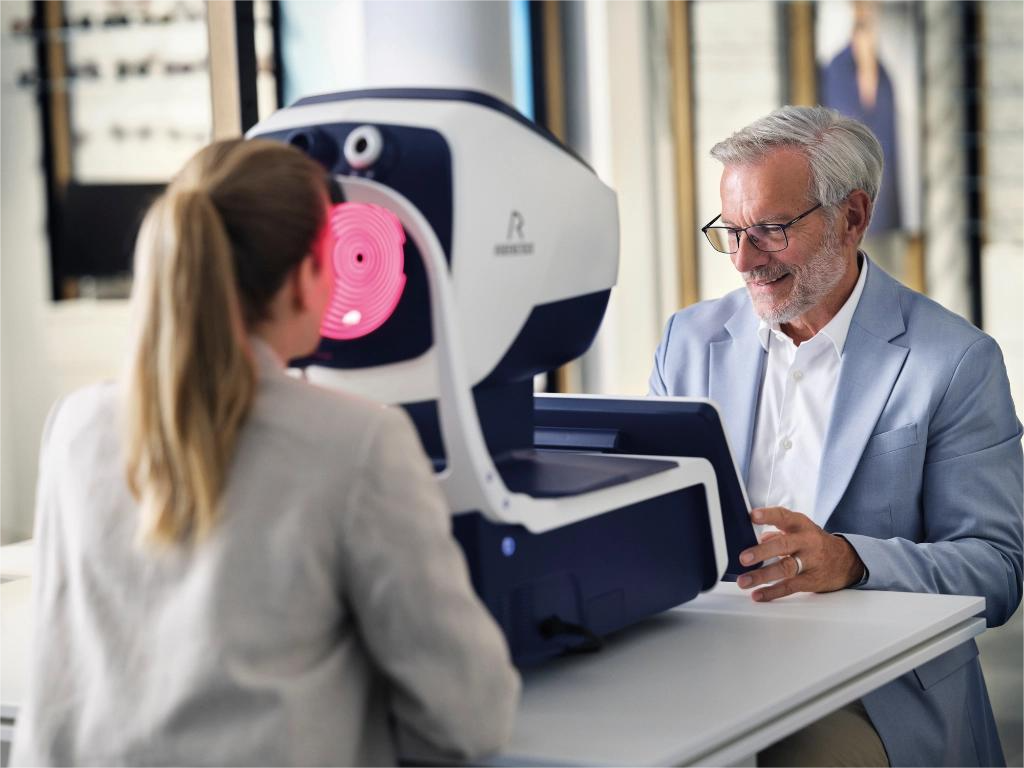
Specialised equipment and expertise are required to achieve a successful ortho-k lens result. Optometrists will examine the following tests to determine if you are a suitable candidate.
- Pupil Size and Prescription: The optometrist will measure your pupil size and prescription to get an accurate reading of your vision without correction. These measurements help design lenses that are effective and comfortable for your eye shape.
- Corneal Topography: This is a non-invasive, detailed mapping of the corneal surface using a special imaging tool. The optometrist will use corneal topography to measure the curvature and shape of your cornea with high precision. This helps create a detailed map of your eye, ensuring that the lenses are customised to fit perfectly.
- Corneal health and retina health: Your eye health will be carefully examined to ensure you are suitable for Ortho-K. Your optometrist will check for conditions such as dry eye, inflammation or other issues that may affect lens comfort or safety. Your optometrist will examine the health of the retina at the back of the eye. This is particularly important for people with myopia, as higher levels of myopia are associated with an increased risk of certain retinal conditions.
- Axial length: Using the ZEISS IOLMaster, we precisely measure the axial length of the eye from front to back. As myopia progression is closely associated with excessive eye growth, regular axial length measurements allow us to objectively monitor changes over time and assess how effectively Ortho-K is controlling myopia progression.

2.First Lens Fitting Session
Once the initial measurements are taken, the optometrist will organise your first OrthoK lens fitting appointment. During this appointment, the optometrist will:
- Teach you how to properly handle and care for your OrthoK lenses, ensuring effective and safe use. This includes proper techniques for inserting and removing the lenses.You will also be guided through the cleaning process. By following these steps, you will maintain the lenses’ effectiveness, comfort, and hygiene, ensuring your eyes remain healthy throughout treatment..
- Check the fit, movement, and centration of the lenses to ensure they are properly aligned with your eyes.

3. On-going care and Follow-Up
Below is a typical review schedule for Ortho-K treatment:
- First Night: After the first night, the optometrist will check lens fit, comfort, corneal reshaping, and vision improvement.
- One Week: A week later, the optometrist will evaluate lens fit, vision quality, and corneal changes. Adjustments may be made.
- One Month: After one month, the optometrist will assess myopia control, corneal health, and lens effectiveness.
- Three Months: A check-up will review myopia control, eye health, and comfort. Adjustments may be made.
- Every Six Months: Every six months, the optometrist will check your vision, lens fit, and myopia control, making adjustments as needed.
What are the benefits of ortho-K?
- Myopia control: Ortho-K is an effective tool for slowing down the progression of myopia, especially in children and young adults. By gently reshaping the cornea overnight, Ortho-K lenses creates a focused image on the retina during the day. This reshaping also reduce the peripheral defocus, a key factor contributing to the elongation of the eyeball and myopia progression. By addressing both central and peripheral focus, Ortho-K helps slow myopia progression while providing clear vision. Studies have demonstraed Ortho K to be effective in reducing the rate of myopia progression by around 50% in suitable children (Song et.al. 2026).
- Freedom from Glasses/Contacts: Provides clear vision during the day without glasses or contact lenses.
- Non-Surgical and Reversible: It is a safe and completely reversible process. If the lens is not worn for 48-72 hours, the effect wears off and the cornea gradually returns to its natural shape. Ortho-K is safe, non-surgical and non-permanent alternative to laser corrective. Hence, for prolonged positive effect, we suggest regular usage of the lenses.
- Convenience for Activities: Ideal for sports, swimming, or dusty environments where glasses or contacts are impractical.
References
Kulinová, M., Efficacy, Safety, and Combination Protocols for Ortho-K in High Myopia: A Synthesis of Key Evidence.
Song, D., Xu, T., Geng, Z., Zhang, P., Meng, T., Sheng, M. and Zhou, L. (2026). Orthokeratology outperforms myopia control spectacles in slowing myopia progression: a prospective comparative study.BMC Ophthalmology, 26(1). doi:10.1186/s12886-026-04797-7.
Németh, J., Tapasztó, B., Aclimandos, W.A., Kestelyn, P., Jonas, J.B., De Faber, J.T.H.N., Januleviciene, I., Grzybowski, A., Nagy, Z.Z., Pärssinen, O., Guggenheim, J.A., Allen, P.M., Baraas, R.C., Saunders, K.J., Flitcroft, D.I., Gray, L.S., Polling, J.R., Haarman, A.E.G. and Tideman, J.W.L. (2021) ‘Update and guidance on management of myopia: European Society of Ophthalmology in cooperation with International Myopia Institute’, European Journal of Ophthalmology, 31(3), pp. 853–883.
Tang, K., Si, J., Wang, X., Lu, X. and Bi, H. (2023) ‘Orthokeratology for slowing myopia progression in children: A systematic review and meta-analysis of randomized controlled trials’, Eye & Contact Lens: Science & Clinical Practice, 49(9), pp. 404–410. doi:10.1097/ICL.0000000000001006.